
Sample report · Fictional property · Confidential format
Kisaragi Hotel
Spatial Investment Case — a fictional engagement illustrating the report an investment committee receives.
Executive finding
The property under-earns its competitive set by a measurable margin, and the majority of that gap is spatial. Three zones — arrival, restaurant, and bar — carry most of the recoverable revenue. A disciplined capex envelope of ¥180M–¥240M supports an indicative payback of 5.2 years under the base scenario.
- Annual revenue gap
- ¥47.2M
- ADR vs. competitive set
- −12%
- F&B capture rate
- 34% vs. 52% benchmark
- Capex envelope
- ¥180M–¥240M
- Indicative payback
- 5.2 years
Zone analysis
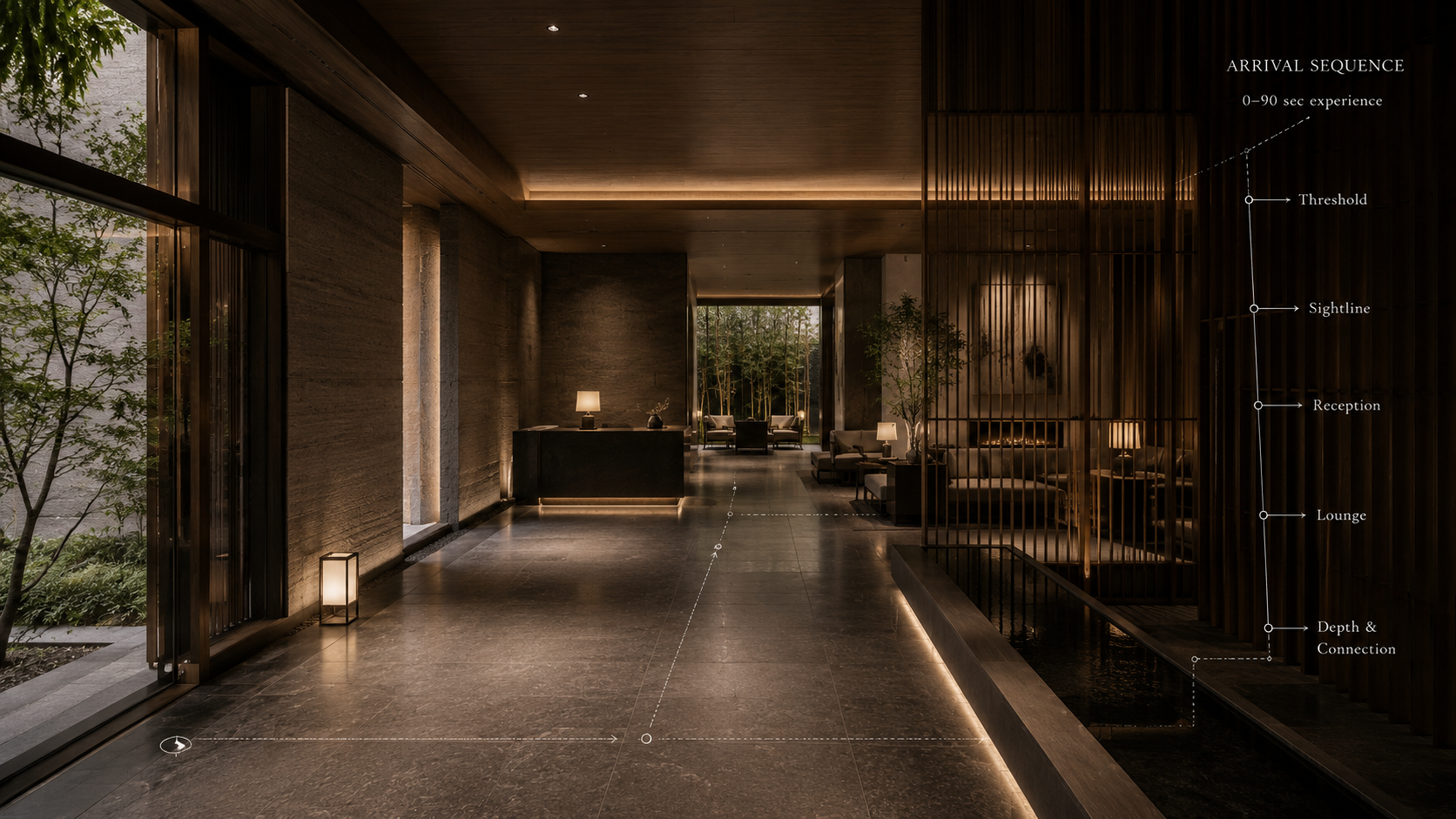
Lobby & Arrival
Priority 9 / 10
The lobby sets the ADR expectation for every arriving guest.

F&B Restaurant
Priority 8 / 10
The outlet under-captures in-house guests because the route and sightline do not support the commercial objective.
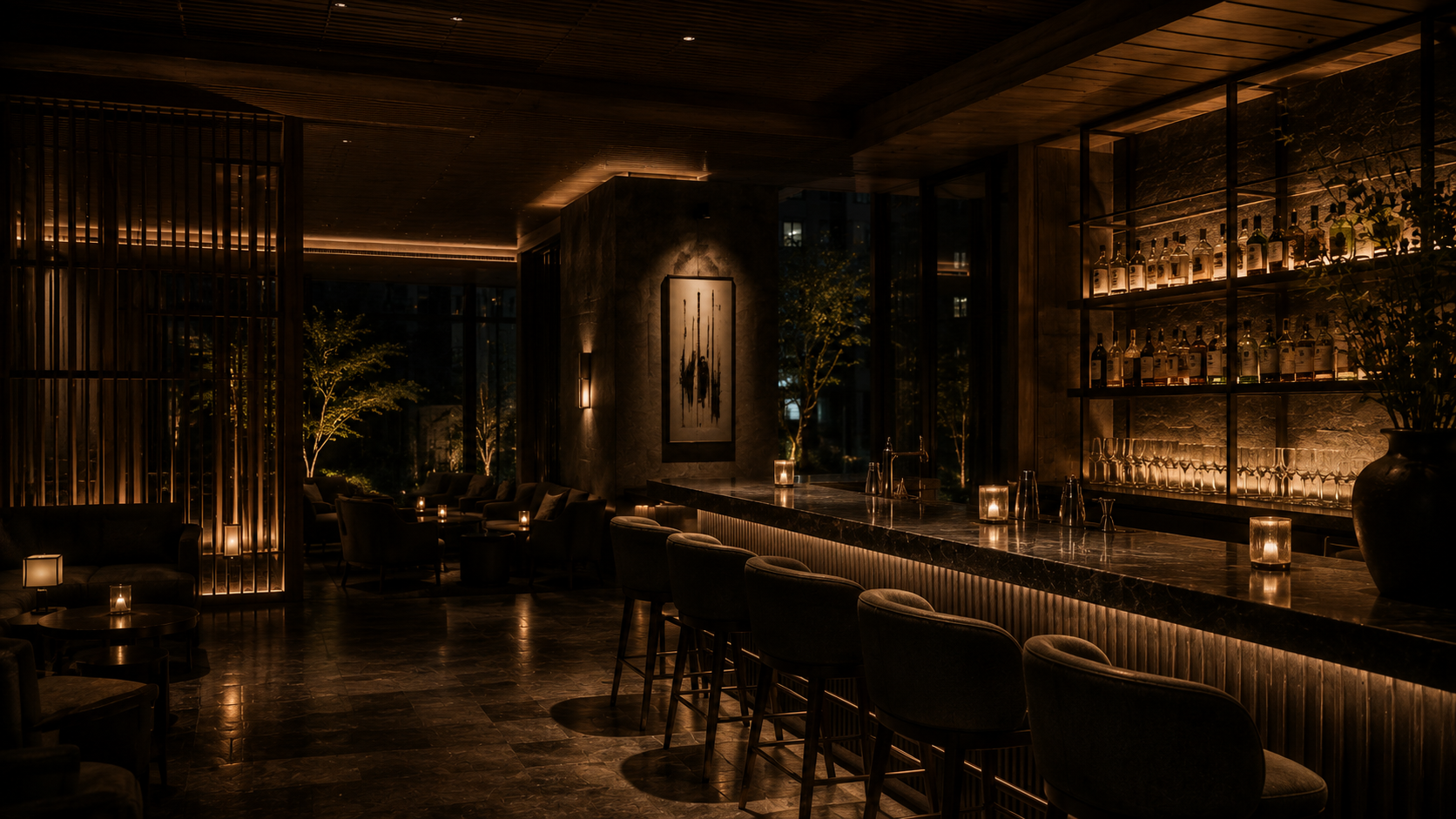
Bar & Lounge
Priority 6 / 10
The bar performs adequately at peak hours but lacks the acoustic separation and atmosphere required after 21:00.
Priority matrix
Interventions are ranked by commercial impact against capital intensity. Arrival and restaurant sit in the underwrite-first quadrant; the bar is sequenced behind them.
Capex envelope
The envelope is set by the investment case, not by the design concept. Allocation follows the priority matrix: the majority of capital is committed where the revenue evidence is strongest.
Lobby & Arrival
42%
F&B Restaurant
34%
Bar & Lounge
16%
Contingency
8%
Envelope: ¥180M–¥240M · Fixed before concept design begins
Payback sensitivity
Payback is tested against ADR uplift capture. The base case assumes 70% of the modelled uplift is realised; the committee sees the downside before approving the envelope.
Governance implications
The case holds only if the design holds. Each zone objective in this report becomes an acceptance criterion in the commercial design brief, and every value-engineering decision during development is logged against it. Where a decision erodes the underwritten revenue, the owner is told — in writing, before it is irreversible.
Fictional property · Format sample only · © Portier K.K.
Owner-side review
This is the report your committee never gets.
Commission a spatial investment case before the design team is appointed.
Begin an enquiry